
Why Better Hospitality Needed a Leadership Group
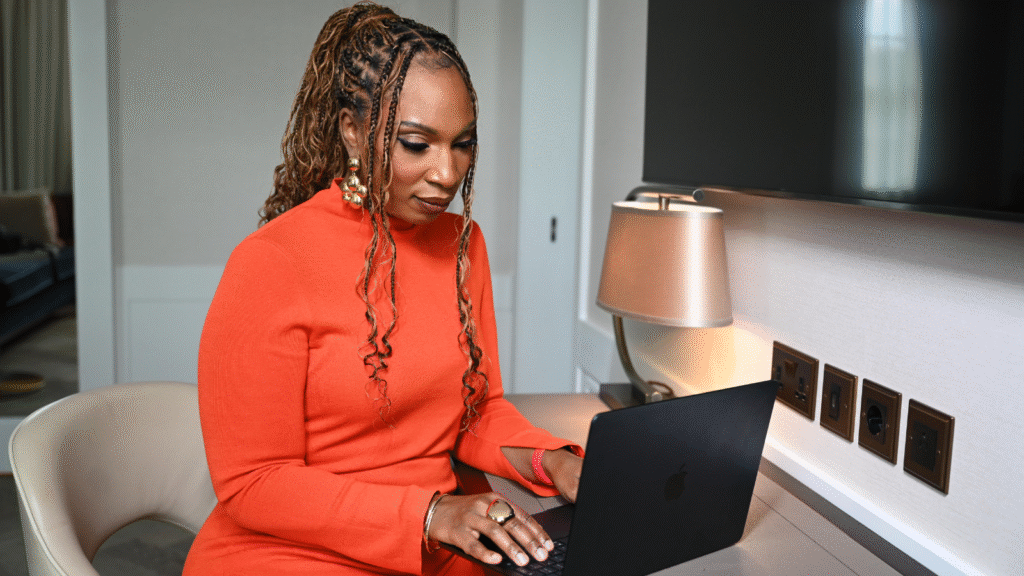
Lorraine Copes, Founder & CEO, Be Inclusive Hospitality
Over the past five years, we have published five industry reports. We have mapped the status quo of inclusion and belonging in our sector: the barriers that Black and ethnic minorities encounter, the experiences they carry, the gap between how inclusion is perceived and how it is experienced, along with the lack of access to training on this topic, despite a continued high appetite from leaders.
That body of research is something I am proud of. It has given leaders a clear, sometimes uncomfortable and well-evidenced picture of where hospitality stands. Our data has its limits, it leans mostly on self-selected survey responses, and it has never been our only source. Almost every leadership room in our industry tells its own story of the lack of representation.
All of this has informed the work we do, from programmes to support the upward social mobility of underrepresented groups to specialised hospitality leadership training that supports leaders to build their capability to lead diverse teams. So, we have matched findings with practical actions that are within our control.
The research has diagnosed, and where we have had control, we have implemented – though I recognise that supporting upward social mobility and leadership training are only part of the jigsaw.
Where the gap remains
The path forward beyond training. This is where the biggest impact sits, and where the gap is widest.
Most organisations in our sector can tell you what they believe about inclusion. Far fewer can tell you what changed as a result.
Culture is not what a strategy document says; it is what leaders do consistently and what an organisation is willing to tolerate. That is a C-suite responsibility.
Which is why I decided to form a Better Hospitality Leadership group.
For context, Better Hospitality will provide a clear route towards a fairer, stronger and more inclusive industry. It will unite research with sector expertise and produce a set of practical resources to support change.
Industry leaders informing outcomes
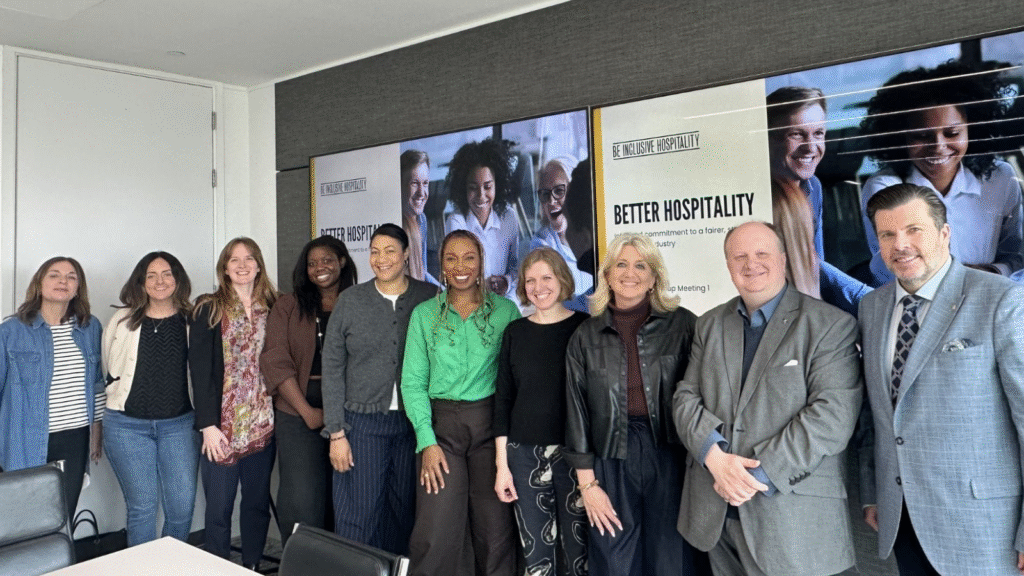
In forming this Leadership Group, we have brought together senior leaders from People and Culture and MD/CEO-level roles: leaders from companies including Mollie’s, Hawksmoor, Levy UK, Rosa’s Thai, Incipio, , WSH, Mitchells & Butlers, Hyatt, Flat Iron, Burger King and Travelodge, alongside industry veterans Karen Bosher and Thomas Heier. That gives us perspectives from organisations of different sizes and sectors, allowing us to identify commonalities, differences and opportunities to be realised.
They have met twice so far to share their views and openly discuss the barriers we face as an industry, and what is needed to move the dial. What came out of those sessions has fed directly into what we are building. They meet again in September to critique the way forward before we release it on Monday 28th September.
Combining sector insight with operational reality
Here at Be Inclusive Hospitality, we sit alongside hospitality operators rather than on the inside. That is both our advantage and our limitation.
Working across this industry as a supplier, we work with a broad range of organisations, different sizes, different models, different stages of maturity. That vantage point lets us see patterns no single company can see from within its own four walls: where the same barrier appears again and again, where good intent stalls, what genuinely shifts and what only appears to.
What we do not carry the day-to-day responsibility of running one of those businesses. We are not the ones holding a P&L through a difficult quarter, deciding what gets attention when four legitimate priorities are pulling at the same budget, or explaining that decision to a team on a Monday morning. The Leadership Group does this day in, day out, and lives with the consequences.
This collaborative approach is essential to the campaign. Hospitality is broad and complex, and the goal is to identify what can work across the sector, drawing on diverse perspectives and experiences.
The business cost of getting it wrong
All of this while acknowledging that the success of this campaign will address one of the challenges facing the industry: the people problem.
How people feel, how they are treated, whether they are paid fairly, and the opportunities they have to progress impact employee turnover, recruitment, and retention. The impact is felt across the employee lifecycle and, ultimately, on the bottom line.
We want to move from describing the problem to designing solutions. The collective experience of the Leadership Group is not a nice addition. It is essential.
From insight to practical action
The constraints of our industry are not an excuse for inaction; they are a design brief. What we release on 28 September is a practical resource, with clear expectations a business can act on and a route into ongoing collective action.
This is why Better Hospitality is different: research validated against operational reality before we publish it, not after.
Five reports have helped us understand what is happening.
The Leadership Group is helping us turn that evidence into what comes next: practical, credible resources shaped with the people who lead our industry.
I do not believe this industry lacks good intent. What it has lacked is a shared and practical view of what better actually looks like, and clarity on who holds responsibility for getting there. That is what we are building.
The Leadership Group is one part of this work. Meaningful change will require wider industry engagement, with businesses and leaders taking the findings forward and putting them into practice.
Join us on 28 September 2026.
If you would like to join us for the release of the Better Hospitality resources and are keen to join the conversation, you can register via the link here.
The details:
Date: Monday 28 September
Time: 09:00–12:00
Location: Leonardo Royal Hotel London, Tower Bridge